
Upper St. Clair Resident Lookup Records
An Upper St. Clair Township resident lookup is a set of narrow checks, not one all-purpose name list. Start from a known address when the question is ownership or parcel history. Start from a public docket when the question concerns a named court matter. Marriage, estate, and mature vital records can support a family-history trail, but they answer event and relationship questions, not who currently lives at an address. The table separates those functions so a result is not asked to prove more than its custodian publishes.
| Record | What It Confirms | Where | Access |
|---|---|---|---|
| Assessment parcel | Address, parcel, and assessed owner history | Allegheny County Real Estate Portal | Address or parcel route is public; owner-name search is subscription-only. |
| Public court docket | Public case context and participant name | Pennsylvania UJS Case Search | Free docket service; sealed, restricted, or retention-removed material may be absent. |
| Marriage or estate record | A county license or estate proceeding | Allegheny Wills/Orphans | Marriage records are public to view from 1885; online marriage search/order covers 1996 forward. |
| Mature vital record | Historic event, date, and family evidence | Pennsylvania State Archives | Birth records mature at 105 years and deaths at 50 years; archive copies are noncertified. |
Use the parcel route only with an address or parcel number. The free county screen does not offer a countywide owner-name search. A published owner mailing address can also differ from the physical parcel address, so it should be treated as a contact clue rather than proof of residence.
For details beyond the public landing page, the county's Property Record Card is a separate route. Its FAQ says a card may be requested without charge through LandHelp@AlleghenyCounty.US or obtained at the copy desk for 25 cents per page. Ask the Office of Property Assessments for the current procedure. The card can deepen a parcel inquiry, but it still describes property assessment material rather than a complete resident list.
Upper St. Clair Docket Record Checks
For a public court-name check, the statewide UJS service is the practical first screen for Upper St. Clair Township. Select Participant Name, enter the last and first name, select Allegheny County, and open the docket-sheet icon only after the results are narrowed. The portal also offers alternative routes for a docket number, citation number, organization name, offense tracking number, police incident or complaint number, and SID or FID. A docket is an index to a court case, not a complete identity profile or a clerk-held file.
| UJS field | Use in an Upper St. Clair resident lookup |
|---|---|
| Search Type | Choose Participant Name for a name-led search. |
| Participant Last Name and First Name | Use exact and variant spellings, then narrow the result. |
| County | Select Allegheny for the Township's court geography. |
| Docket Number or Citation Number | Use these instead when a reliable case reference is already known. |
| Advanced Search | Optional control for additional search aids. |
The Allegheny Civil/Family search screen shows the separate county route, which requires registration, credentials, and CAPTCHA before case search. It is a useful reminder that a public docket and a court-file request are different access paths.
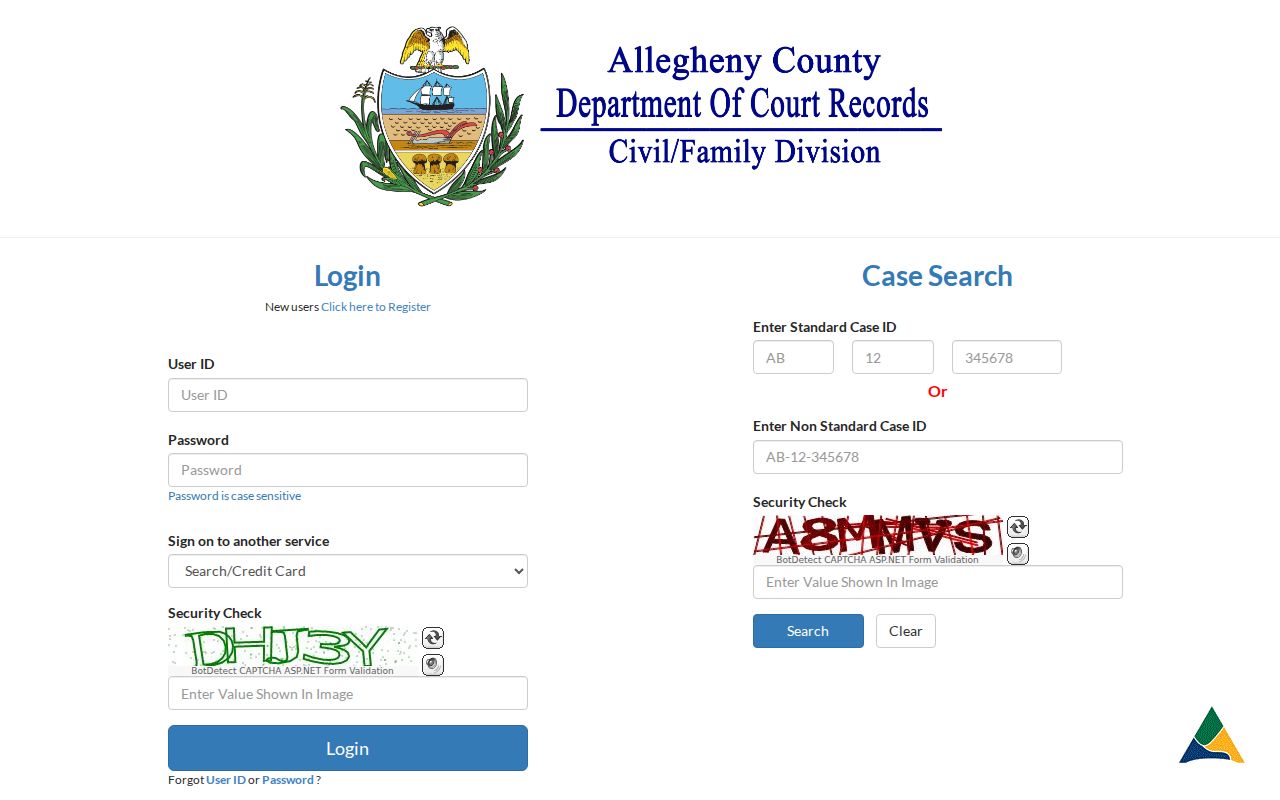
The county login requirements mean that a name alone may not open the documents behind a case. Call the appropriate Court Records division when a docket is insufficient and confirm its current copy or viewing procedure.
Avoiding Upper St. Clair Lookup Errors
Common names are the central risk in a resident lookup. Compare an exact or variant surname, middle initial, date range, municipality, parcel ID, court caption, known associate, entity number, or license number before joining two records. A property record might identify an assessed owner, while a similarly named court participant may be tied to another municipality. A court date is not evidence that the person currently lives in Upper St. Clair Township.
Parcel results offer a useful but limited independent check. The county describes assessment, tax, building, owner-history, comparable-property, appeal-status, and map-linked information. Its result material can include a parcel ID, address, municipality, recording and sale references, deed book/page, and an owner-mailing section. Those are property-record fields. They do not list every person connected with a dwelling.
Note: A missing result can reflect spelling, coverage, sealing, retention, or an exact-identifier requirement rather than proof that no record exists.
Verify an Upper St. Clair Resident
Verification works best when each record answers a different part of the question. Anchor the name to a published parcel or another reliable identifier, then compare a public docket or a marriage, estate, or archive index only for consistent details. If an official copy is genuinely needed, ask the office that holds the original record. A resident lookup should preserve the date checked, the spelling used, and the reason two records appear to concern the same person.
- Search a known address or parcel in the county portal and record the parcel ID and published owner-history context.
- Run the name and reasonable spelling variants in UJS with the Allegheny County filter, then compare case dates and caption details.
- For a family-history question, check the appropriate marriage, estate, or mature vital-record route rather than inferring a relationship.
- Request a certified or official copy from the custodian only when that office confirms the record is available and the requester meets its rules.
- Docket
- A court's running case record, identified by its docket number and event entries.
- Index versus image
- An index points to a record. An image is the scanned record itself, and may have a different access route.
- Certified copy
- A copy issued and authenticated by the custodian. It is different from a public search result or an archive copy.
Upper St. Clair Marriage Record Trails
Allegheny County marriage records are open to public viewing from 1885 to the present. The online search/order route covers licenses issued on or after January 1, 1996, and requests need one spouse's complete application name, the marriage year, and the proper fee. That can connect two names to a county-issued license. It does not establish a current address or a full household.
The Wills/Orphans case-search route covers estate, will, guardianship, trust, marriage, and related matters, with registration required before online case search. A historic heir question can begin with a mature death-index or obituary lead, then move to the estate docket and a lawful file or copy request. Ask Wills/Orphans about current costs and scope before mailing a will-search form.
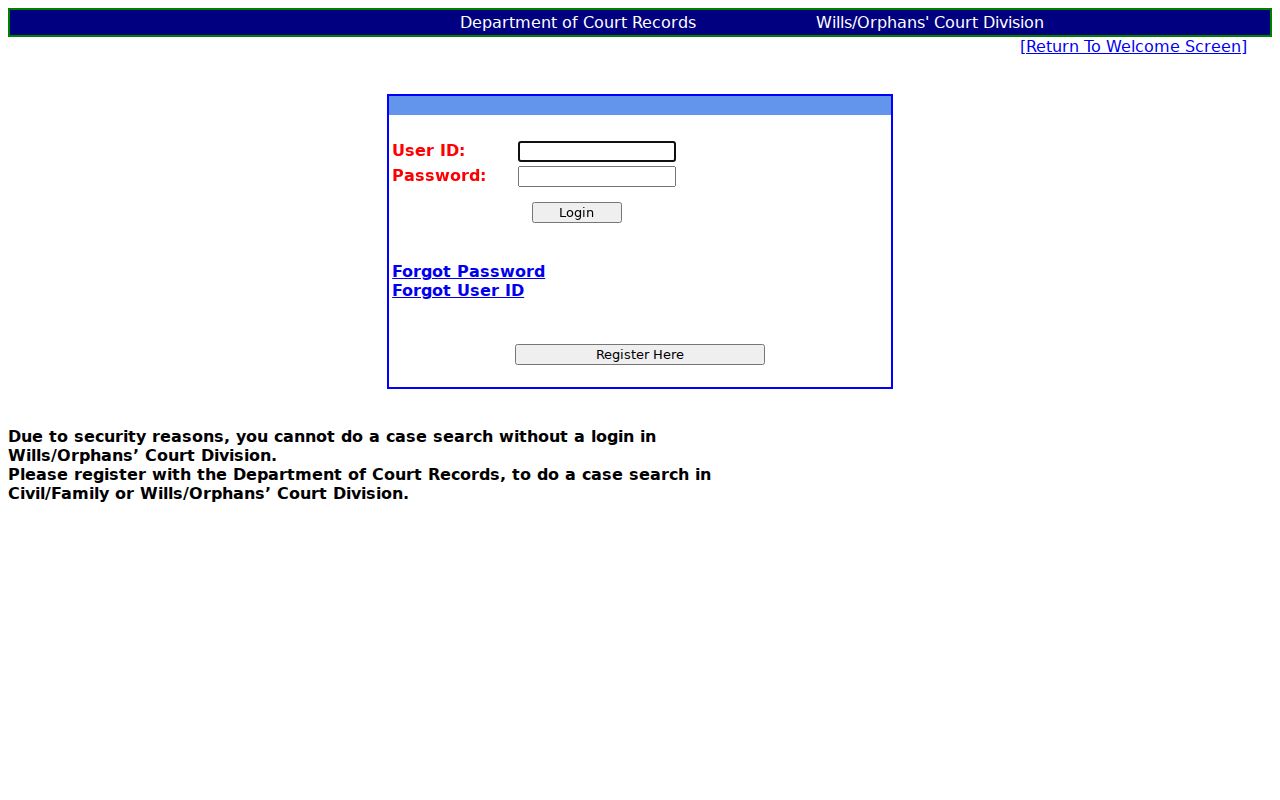
The registration screen reflects an access boundary, not an absence of records. Documents may still be sealed or limited by statute or local rule after a case is found.
The county marriage-record page is the official source for the coverage and order rules.
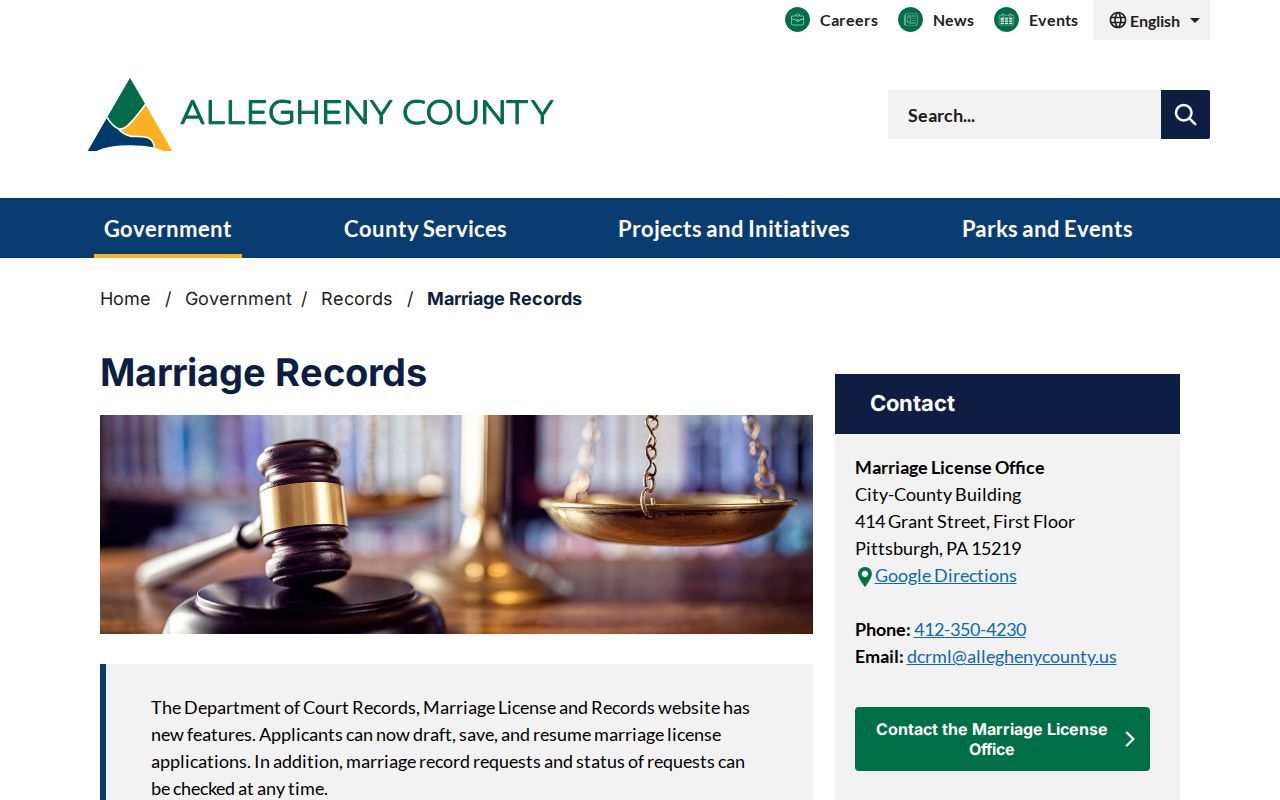
Use the county source to confirm the current route before sending payment or personal documents.
Upper St. Clair Vital Record Dates
Pennsylvania vital-record access changes with the event date. The Department of Health issues modern certified birth and death records, with eligibility rules for modern copies. Birth records become public through the State Archives at 105 years, and death records at 50 years. The Archives index is the starting point for a historical certificate number, not a promise that every event is instantly available online.
For an archive request, use the name, event date, and certificate number from the index. Birth orders for 1908, 1909, and 1911 also need month and county. Archive copies cost $5 and are noncertified, including when the search is unsuccessful. Modern birth orders have different eligibility and identification requirements, so do not substitute an archive procedure for a modern order.
The authorized Pennsylvania vital-record order portal is the official online starting point for modern orders.
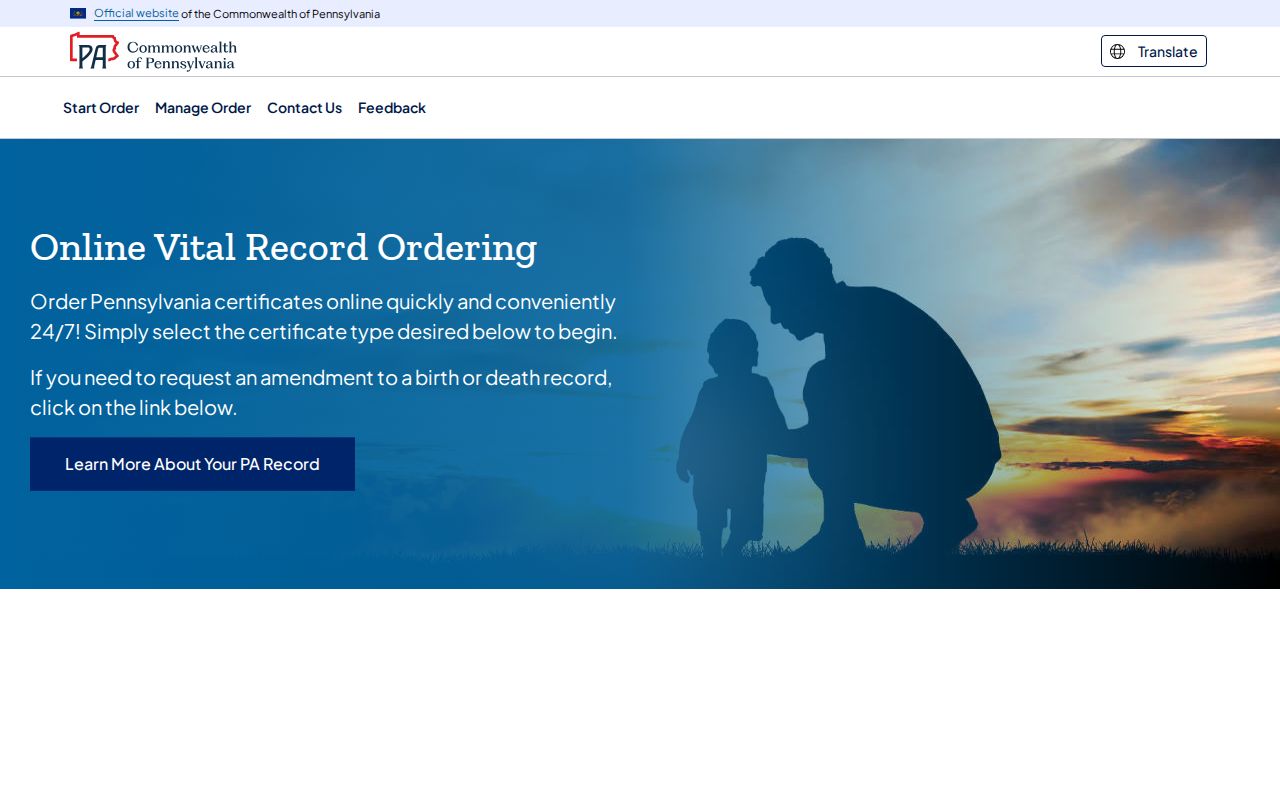
The portal belongs at the end of a date-and-eligibility check. A modern certificate request is not a general resident-name search.
When Upper St. Clair Records Are Missing
An official search can end without a match for sound reasons. A record may fall outside an online date range, use a name variant, require a case or parcel identifier, be sealed, or have been removed under a retention schedule. Court material can be restricted, and voter or vital records have their own access rules. Treat a no-result as a prompt to identify the next custodian, not as a conclusion about a person.
Use a practical fallback order: contact the custodian by phone or counter, make a narrow Right-to-Know request only for an existing releasable agency record, consult a library, archives, or the Historical Society for historic context, then use the office's official request form. Common Pleas case files are not an RTKL substitute, because Allegheny County directs requesters to the relevant Court Records division instead.
The county court-record access notice identifies that division-based approach.
That route helps distinguish an available docket from the separate process for viewing or copying a court-held file.
Upper St. Clair Resident Lookup Privacy
Pennsylvania does not make every name or address record public. The Address Confidentiality Program lets eligible participants use a substitute address in voter registration, court and state records, vehicle files, school records, marriage licenses, and utility bills. A public-record absence can therefore be a safety measure. Voter status is intended for a person checking their own registration; access to a public voter-information list requires identification and a written permitted-use certification under the Election Code.
Court files may be sealed, vital records are restricted before their maturity periods, and protected information can be redacted. For a correction question, ask the custodian what documentation it requires and keep its written response. Do not reproduce sensitive fields from a record.
Lawful use. Use a resident lookup for personal, lawful research and respect each custodian's limits. Pennsylvania's stalking and harassment laws still apply when information came from a public record.