
Upper St. Clair Previous Residents by Era
Past residents are not found in one official list. The source changes with the period and the question. Start with the present parcel record, then follow recorded transfers back. Use directories only where their volume covers the household’s geography, and use a federal census only after the 72-year release interval. Township files can be useful for an alteration or plan, but no public Upper St. Clair permit-search index was verified.
| Source | Years It Covers | Where Held | What It Shows |
|---|---|---|---|
| County Real Estate Portal | Current public system; online historical start not verified | Allegheny County online | Address or parcel route and assessment, building, tax, and owner-history categories. |
| Recorded documents | Exact online cutoff not verified | Division of Real Estate portal or Room 101 | Deeds, mortgages, plans, parties, and legal descriptions. |
| Grantor and grantee index microfilm | 1788–1904 | Pennsylvania State Archives | Direct and Adsectum references to historic deed books. |
| Historic Pittsburgh directories | 1837–1930, with gaps | Historic Pittsburgh | Name, address, or occupation context when the volume covers the geography. |
| Later library and archive directories | Beyond 1930; exact runs not verified | Carnegie, Heinz, and Township Library inquiries | Possible later address or telephone evidence. |
| Federal census | Released after 72 years | National Archives and authorized repositories | Household, age, birthplace, and address or ward context. |
| Township permits or inspections | Retention and coverage not verified | Upper St. Clair AORO | Possible dated construction or alteration evidence. |
Each record supplies a limited part of the story. A deed can show a transfer, while a directory can show a printed address association. Neither one creates a complete list of everyone who lived in a house.
Upper St. Clair Previous Residents: Parcel Start
Allegheny County’s Real Estate Portal is the practical start for a known Upper St. Clair address. Enter the house number and street name without a suffix, then use the optional municipality field to narrow a common street. The alternate route is a parcel number. Note the parcel identifier, physical location, and the property categories available before asking for a deed or Property Record Card.
The county recognizes three address types on a parcel: physical property location, owner mailing, and tax mailing. The last two can differ from the situs because they are places for notices. They are not proof that the person receiving mail lived at the property. The public screen is also not a free countywide owner-name search. Owner-name searching and legal-description retrieval are documented as subscription features.
- Search the address and select the correct candidate parcel.
- Save the parcel ID and the physical property location.
- Compare any owner-history category with the most recent recorded deed.
- Request a Property Record Card if more assessor detail is needed.
- Keep the parcel ID beside every later deed and map note.
For a Property Record Card beyond the public website, county guidance directs requests to LandHelp or the copy desk. The county says email copies are free and printed pages are 25 cents, subject to the current process.
Upper St. Clair Previous Residents and Deeds
The title path runs backward from the latest known transfer. Ask the Division of Real Estate for the deed, or use its public document portal when the known identifier can be searched. The inspected portal exposed Search and Results, but not a reliable field list or online coverage date. Room 101 at the County Office Building remains the concrete alternative for deed and plan copies, with the deed/plan copy line at 412-350-4224.
Read the deed before moving to the next name. Record the grantee, or buyer; the grantor, or seller; recording reference; transfer date; legal description; and any subdivision or lot wording. Then search the seller as a prior grantee to find that person’s earlier acquisition. Repeat the process backward. A mortgage or plan can help explain a property’s history, but it is not a substitute for the transfer deed.
- Grantor
- The person or entity transferring an interest in a recorded deed.
- Grantee
- The person or entity receiving that interest. In a backward search, a former grantor is often the next earlier grantee.
- Chain of title
- The sequence of documented transfers for the same property or tract.
- Legal description
- The lot, plan, tract, or metes-and-bounds wording that identifies land when an old deed lacks a modern house number.
Upper St. Clair Previous Residents Before 1905
Allegheny County formed in 1788. The Pennsylvania State Archives guide lists historic grantor, called Direct, and grantee, called Adsectum, index microfilm through 1904. These are finding aids that point to a deed book and page. They do not prove that every deed image is freely available online. The modern county portal’s historical cutoff was not exposed during review, so the archives route is the supported fallback for the older trail.
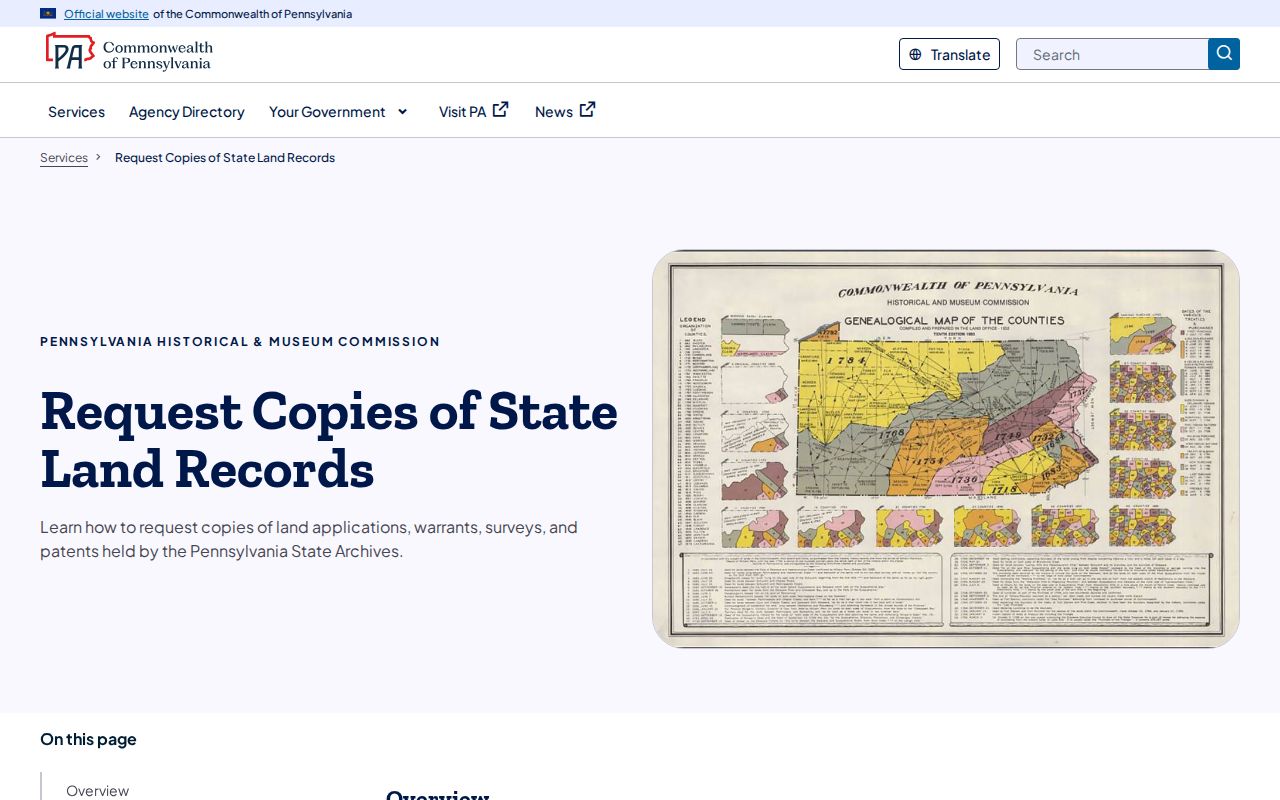
Use the index direction that fits the known party, retrieve the cited deed-book entry, and copy the legal description before taking another step back. Commonwealth land-office records, including warrants, surveys, returns, and patents, concern original tract disposition. They can be relevant for an early farm or tract, but they do not replace later county deed transfers.
| Modern county route | Historic archives route |
|---|---|
| Address or parcel-based portal and county document/copy channels | Grantor/grantee microfilm and state-land indices by party or tract |
| Useful for the current parcel and later recording trail | Useful for the 1788–1904 deed-index bridge and original land context |
Upper St. Clair Previous Residents: Old Geography
Modern street addresses can disappear from old records. Upper St. Clair retained part of a larger St. Clair Township that was later divided many times. Early material may use a former township label, road, farm, plan, landowner, tract, or neighboring municipality. A modern ZIP label is not an adequate substitute for the county parcel or legal description.
When a house number stops working, make a list of every place term found in the deed and parcel file. Search the older St. Clair Township label with a road or farm name. Compare lot and plan wording across deeds. The Historical Society’s maps, house photographs, oral histories, family papers, and local road material can bridge a rural landmark to a later subdivision address.
Note: No Township-wide street-renumbering year or confirmed Upper St. Clair Sanborn map list was verified.
Upper St. Clair Previous Residents in Directories
Ownership is only one part of an address history. A printed directory and a released census may supply household context, but each has a coverage limit. Historic Pittsburgh’s directories cover Pittsburgh and former Allegheny City from 1837 to 1930 with gaps. Check the volume’s geographic scope before using it for an Upper St. Clair address. Later metropolitan directories may be available through Carnegie Library, Heinz, or the Township Library, but exact runs have not been verified.
Use the Upper St. Clair Township city directory collections for the full collection and entry-reading route. For a single address, record the printed spelling, address, year, page, and any spouse or work notation. Then pair it with the nearest released census. Census material can add age, birthplace, and household members; it still does not establish a continuous address history between enumerations.
- Choose a directory or telephone book that may reach the right geography.
- Transcribe the address and entry exactly, with year and page.
- Check the next earlier and later available volume for a move or spelling change.
- Compare the nearest released federal census using age, birthplace, household members, and locality.
- Return to the parcel and deed chain to test ownership and property identity.
Upper St. Clair Previous Residents: Local Archives
The Historical Society of Upper St. Clair is the strongest verified local bridge when a deed describes an unfamiliar farm, road, or plan. Its digitized collection includes families, schools, houses, roads, landmarks, and the Township’s agricultural-to-suburban development. The fuller archive holds maps, photographs, scrapbooks, clippings, correspondence, oral histories, personal papers, manuscripts, and organization material.
The Historical Society collection on Historic Pittsburgh can be checked first, followed by a focused inquiry for unscanned records. Give the staff a road, subdivision, former farm, surname, time window, and document type. The Township Library at 1820 McLaughlin Run Road, 412-835-5540, is also a FamilySearch affiliate and a practical place for catalog or local-history questions.
The circa-1830 Fulton Log House, from the Gilfillan Farm landscape, is one historic landmark that can orient early land research. It should never be used alone to assign a family to a specific address. The deed, map, photo, or archive item must independently support the connection.
Upper St. Clair Previous Residents: Estate Records
An address trail sometimes ends with a death, an obituary, or an estate proceeding. Pennsylvania death certificates become public at 50 years, and births at 105 years. Those dates determine whether the State Archives or the modern Division of Vital Records is the appropriate route. An estate file can supply a procedural lead about a decedent, but sealed or restricted material remains unavailable.
Allegheny Wills and Orphans Court information is shown in this source capture.
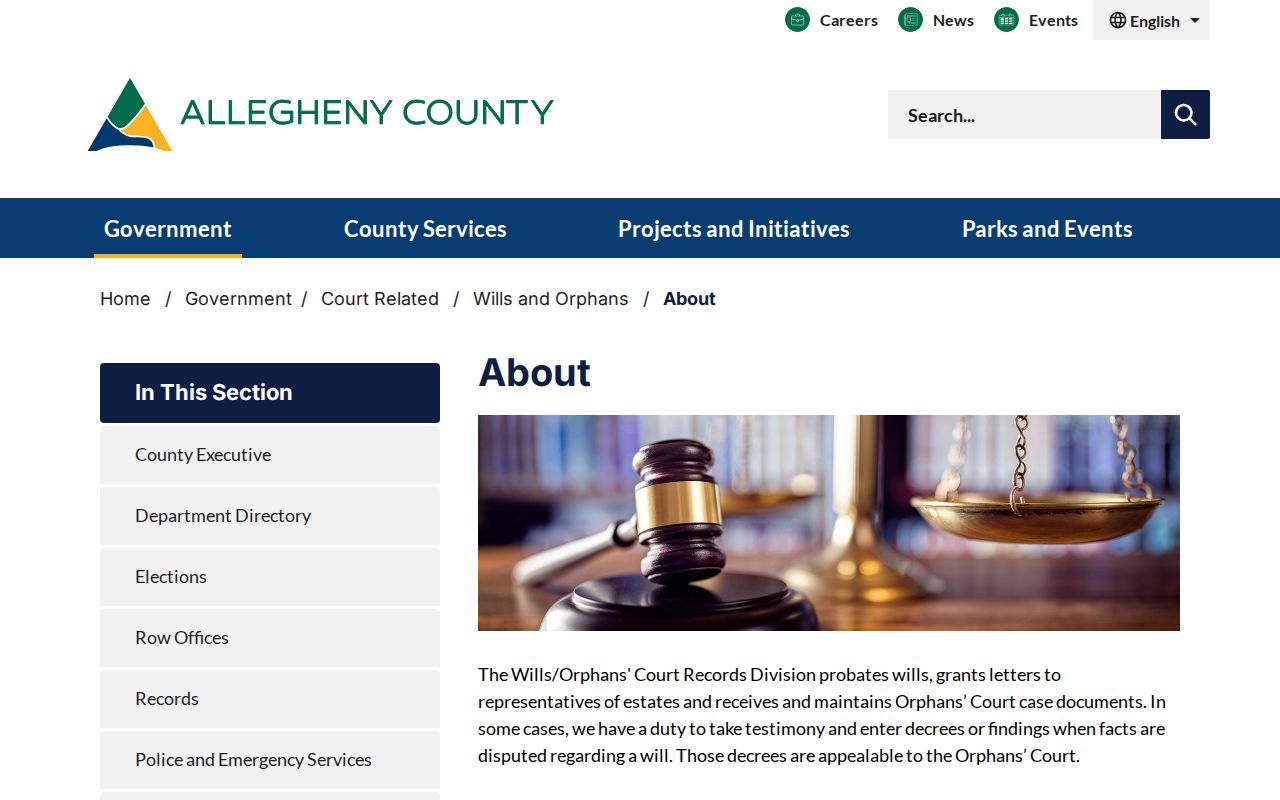
The Department of Court Records handles Wills and Orphans matters, including decedent estates, wills, trusts, and related filings. The division can be reached at 412-350-4180. Start with a mature death index or reliable obituary lead, then use the docket and court copy process to test whether an estate record belongs to the same person.
Upper St. Clair Previous Residents Need Separate Proof
A name-based state record is not a substitute for an address trail. The Pennsylvania State Police’s PATCH route concerns criminal-history requests and has its own result states, timing, and access-and-review rules. It should not be used to decide who lived at an Upper St. Clair house. In the same way, an unclaimed-property match can be an old-address clue for a person with a valid claim, but it requires proof of entitlement and does not prove residence.
The Pennsylvania PATCH overview is the source for the following official-system capture.
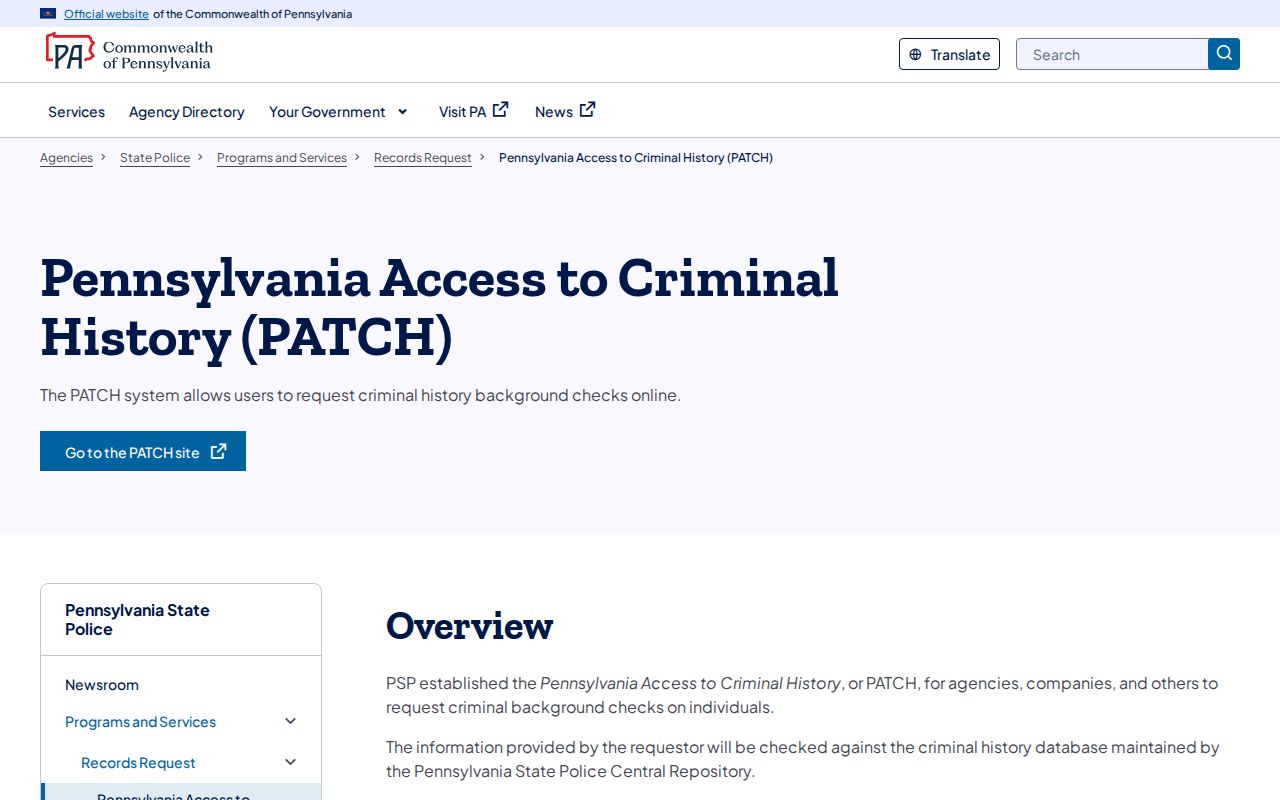
PATCH distinguishes No Record, Record, and Request Under Review. Those states describe its own repository process, not a former-address result. Pennsylvania Treasury’s unclaimed-property search is the documented source for this second capture.
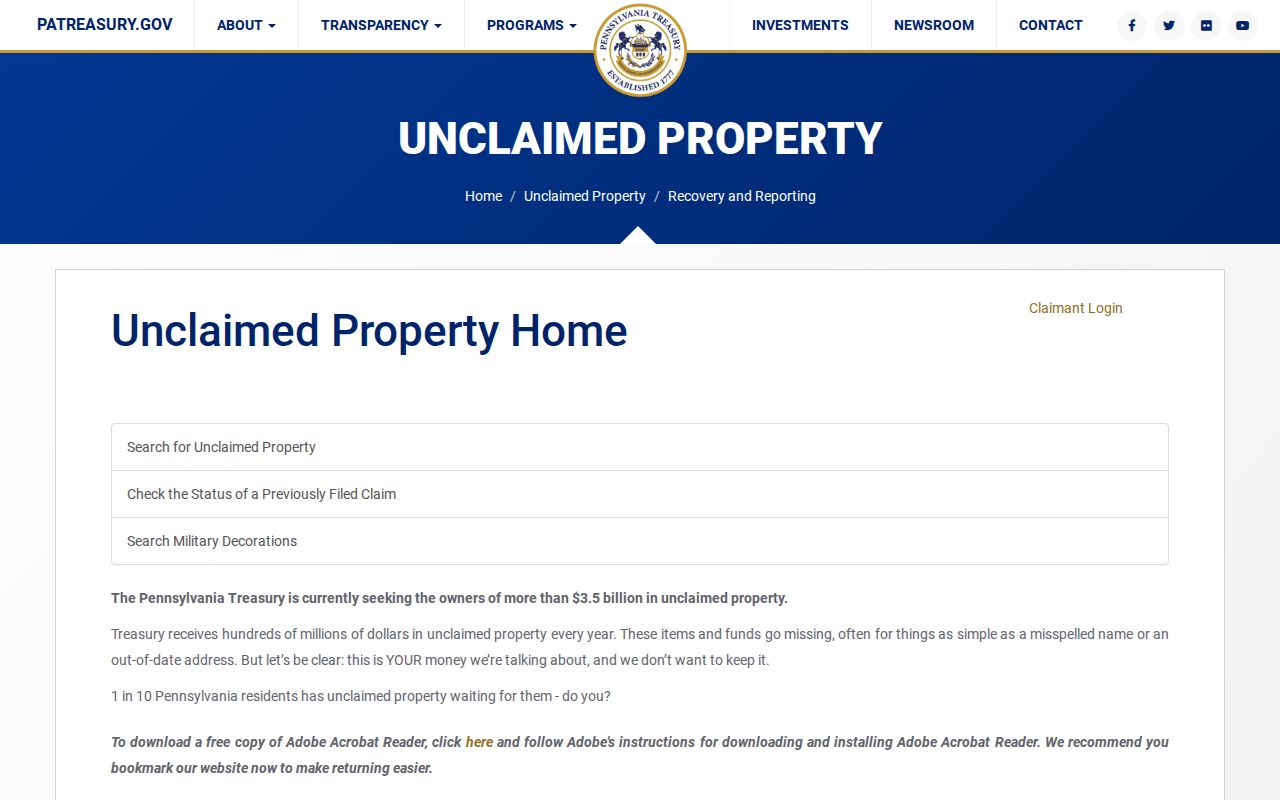
Use an old mailing clue only as a lead to verify with deeds, directories, census, or archive records. Misspelled names and outdated addresses can appear in the claim system.